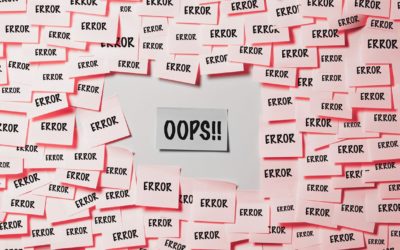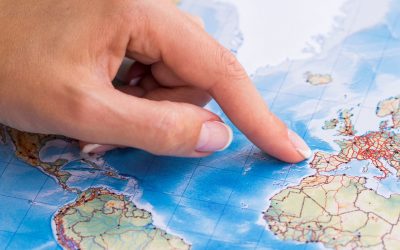
If we think about it, it seems unlikely and even improbable that a translation error could cause a war between nations or end up causing thousands of deaths.
However, history is scarred by incidents in international relations caused by discrepancies in the translation of communications, treaties, and speeches.
Todos os artigos da categoria
All articles in the category
Translation
What are the most common challenges for translators?
“False friends” are not your next-door neighbors! 😬
Joking aside, this expression refers to the difficulty that arises in mastering a lexicon when there’s a false similarity between words in one language and the other, which can lead to error.
The value of translation—far beyond money (Part I)
Many clients believe that translating is simply transferring words from one language to another. However, translation involves so much more than transferring words: translation is about conveying meaning, and doing so with consistency and accuracy, in a way that feels natural and fluid in the target language, while respecting the style and tone of voice of the source content.
Is post-editing a relevant skill?
In the past, it was often easier to work directly from the source text and translate from scratch than to post-edit the usually poorly generated content. But advances in machine translation, mostly driven by the post-edited text being fed back into the engines for learning, now allow for a higher-quality output, and this has been increasing the demand for this service.
Considerations on the Portuguese Language and the Orthographic Agreement – Part II
The pursued unification is utopian, in addition to being unnecessary, and the changes in the new agreement give rise to a series of linguistic problems for which the experts have not yet found an answer. The addition of optional rules and double spellings has only aggravated the problem and further disfigured our centuries-old and very rich language.
Considerations on the Portuguese Language and the Orthographic Agreement – Part I
Portuguese is a Latin language, yes, but only because, along with other prior influences, it is derived from Latin just like languages such as Spanish, French, and Italian. Latin is a dead language, disseminated by the ancient Roman Empire, in times when the Roman and Greek people were the pinnacle of Western civilization and considered all other cultures mere “barbarians.”
Certified translations & “certified” or “sworn” translators
Nor is it necessary to hire an “official” translator, i.e., a member of the Portuguese Translators Association—as some institutions unknowingly demand—to carry out a certified translation. Any professional translator can perform the translation, which will subsequently be certified by the competent authority, and the document produced will have legal validity.
Technology: what’s in store for translators? – Part 3
The border between literary and non-literary translators is now becoming a bit blurred. Non-literary translation has also expanded rapidly from being mostly technical, legal, and medical to include a much wider range of content, such as marketing and publicity, business, scientific, pharmaceutical, digital content, video games, subtitling, etc.
Technology: a two-faced game changer – Part 2
Technology has also brought up significant changes in the perspective and approach of multilingual communication.
On one hand, this is mutually beneficial: just as technology benefited translation professionals, technical translation is also vital for multiple technological fields—from construction and engineering to automation and robotics.
Technology: the evolution of translation – Part 1
All the way back in 1964, to describe the phenomenon by which the world’s culture was simultaneously shrinking and expanding due to the instantaneous sharing of culture originated by technological progress, the media and communication theorist Marshall McLuhan coined the term “global village.”
Is it human to err? Yes, but it comes at a price.
If we think about it, it seems unlikely and even improbable that a translation error could cause a war between nations or end up causing thousands of deaths.
However, history is scarred by incidents in international relations caused by discrepancies in the translation of communications, treaties, and speeches.
What are the most common challenges for translators?
“False friends” are not your next-door neighbors! 😬
Joking aside, this expression refers to the difficulty that arises in mastering a lexicon when there’s a false similarity between words in one language and the other, which can lead to error.
The value of translation—far beyond money (Part I)
Many clients believe that translating is simply transferring words from one language to another. However, translation involves so much more than transferring words: translation is about conveying meaning, and doing so with consistency and accuracy, in a way that feels natural and fluid in the target language, while respecting the style and tone of voice of the source content.
Is post-editing a relevant skill?
In the past, it was often easier to work directly from the source text and translate from scratch than to post-edit the usually poorly generated content. But advances in machine translation, mostly driven by the post-edited text being fed back into the engines for learning, now allow for a higher-quality output, and this has been increasing the demand for this service.
Considerations on the Portuguese Language and the Orthographic Agreement – Part II
The pursued unification is utopian, in addition to being unnecessary, and the changes in the new agreement give rise to a series of linguistic problems for which the experts have not yet found an answer. The addition of optional rules and double spellings has only aggravated the problem and further disfigured our centuries-old and very rich language.
Considerations on the Portuguese Language and the Orthographic Agreement – Part I
Portuguese is a Latin language, yes, but only because, along with other prior influences, it is derived from Latin just like languages such as Spanish, French, and Italian. Latin is a dead language, disseminated by the ancient Roman Empire, in times when the Roman and Greek people were the pinnacle of Western civilization and considered all other cultures mere “barbarians.”
Certified translations & “certified” or “sworn” translators
Nor is it necessary to hire an “official” translator, i.e., a member of the Portuguese Translators Association—as some institutions unknowingly demand—to carry out a certified translation. Any professional translator can perform the translation, which will subsequently be certified by the competent authority, and the document produced will have legal validity.
Technology: what’s in store for translators? – Part 3
The border between literary and non-literary translators is now becoming a bit blurred. Non-literary translation has also expanded rapidly from being mostly technical, legal, and medical to include a much wider range of content, such as marketing and publicity, business, scientific, pharmaceutical, digital content, video games, subtitling, etc.
Technology: a two-faced game changer – Part 2
Technology has also brought up significant changes in the perspective and approach of multilingual communication.
On one hand, this is mutually beneficial: just as technology benefited translation professionals, technical translation is also vital for multiple technological fields—from construction and engineering to automation and robotics.
Technology: the evolution of translation – Part 1
All the way back in 1964, to describe the phenomenon by which the world’s culture was simultaneously shrinking and expanding due to the instantaneous sharing of culture originated by technological progress, the media and communication theorist Marshall McLuhan coined the term “global village.”